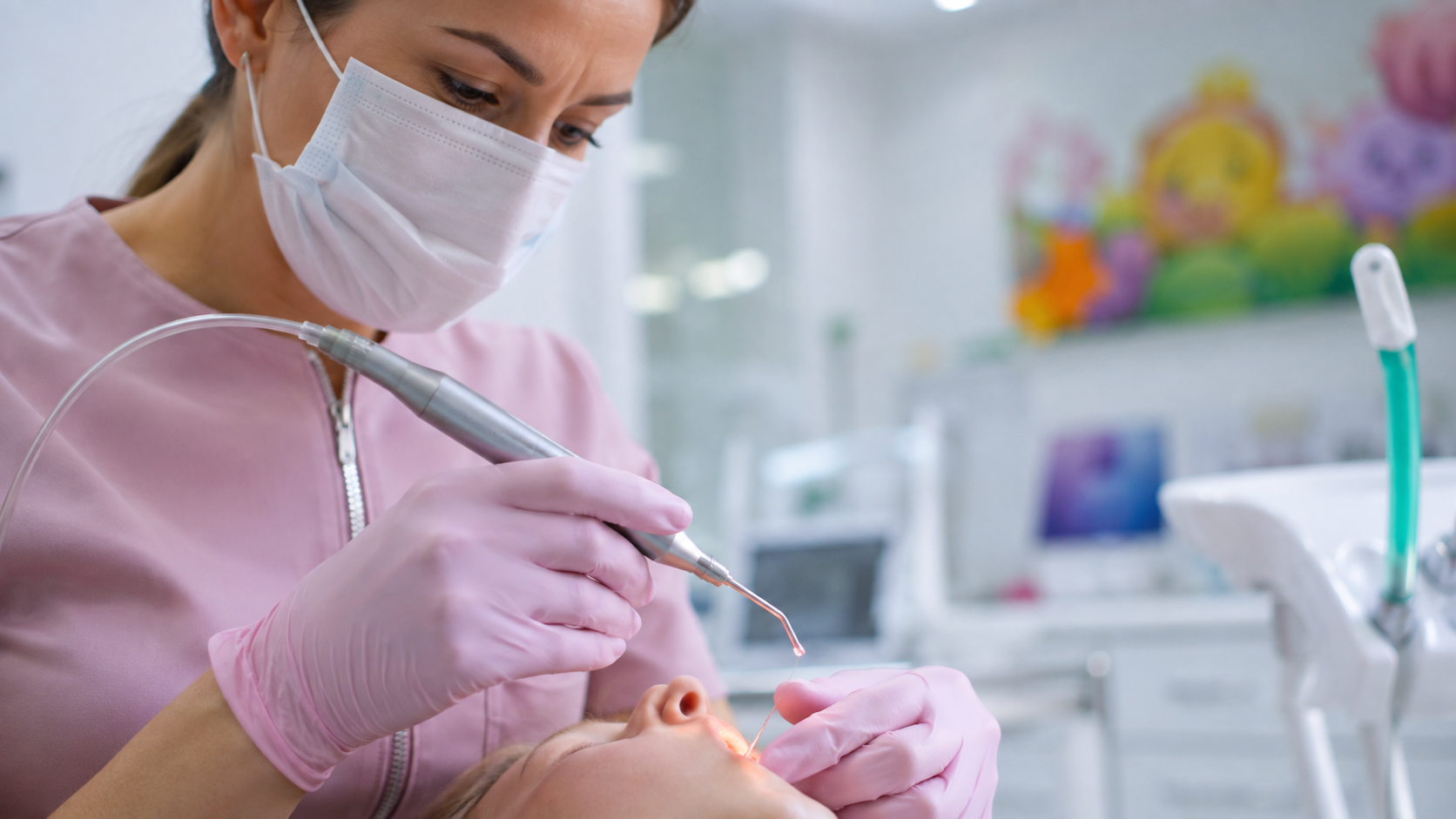
Sleep apnea in children: could it be a dental issue?
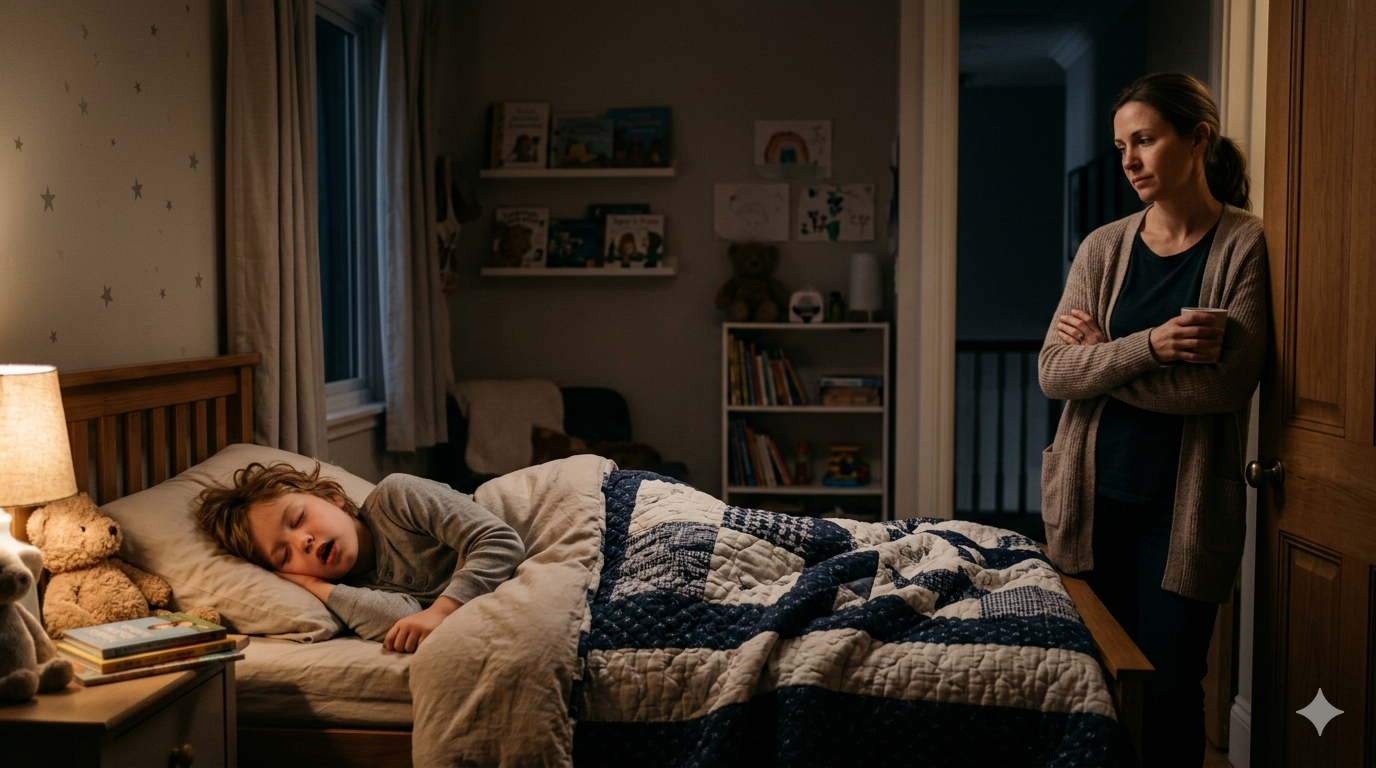
When most people think of sleep apnea, they picture an adult snoring loudly and waking up exhausted. But sleep apnea affects children too — and in kids, it is far more likely to go unrecognized. The symptoms look different, the causes are often structural, and the long-term consequences of missing it extend well beyond a bad night's sleep.
What surprises many parents in Walnut Creek is that the mouth, jaw, and oral development play a central role in whether a child develops sleep apnea — and that a pediatric dentist trained in airway-focused care is often one of the first providers to identify the signs.
At Tooth + Tongue – Specialized Dentistry and Anesthesia, we evaluate airway development as a routine part of our pediatric care. Understanding what sleep apnea looks like in children, and how dental structure contributes to it, can help parents recognize warning signs earlier and seek the right kind of support.
What is sleep apnea in children?
Obstructive sleep apnea (OSA) in children occurs when the upper airway becomes partially or fully blocked during sleep, causing repeated interruptions in breathing. These interruptions can last seconds at a time and may happen dozens of times per hour — often without the child or parent being aware.
Unlike adults, children with sleep apnea rarely present with the dramatic gasping or daytime sleepiness that parents might expect. Instead, the signs tend to be subtler and easier to attribute to other causes.
How common is it?
Pediatric obstructive sleep apnea affects an estimated one to five percent of children, though many researchers believe it is significantly underdiagnosed. A large number of children with sleep-disordered breathing fall into a gray zone — not severe enough for a formal diagnosis, but symptomatic enough to affect development, behavior, and quality of life.
Signs of sleep apnea in children
Because pediatric sleep apnea presents differently from the adult version, parents often miss it for months or years. The following signs — particularly when several appear together — are worth taking seriously.
During sleep
Snoring is the most commonly recognized symptom, but it is far from the only one. Parents should also watch for:
Mouth breathing during sleep, with the jaw dropped open
Restless sleep, frequent repositioning, or kicking
Pauses in breathing or gasping sounds
Night sweats without fever
Sleeping in unusual positions — with the neck extended, chin pushed forward, or head hanging off the pillow — as the child's body unconsciously tries to open the airway
Bedwetting beyond the age when it would typically resolve, which can be linked to the physiological stress of disrupted breathing
During the day
The daytime signs of pediatric sleep apnea are often mistaken for behavioral or attention issues:
Difficulty waking in the morning despite adequate sleep time
Chronic fatigue or low energy
Hyperactivity, impulsivity, or difficulty concentrating — symptoms that overlap significantly with ADHD
Irritability or mood swings
Slower academic progress than expected
Mouth breathing during waking hours as well as sleep
Dark circles under the eyes that persist regardless of how much sleep the child gets
The dental and jaw connection
This is where pediatric dentistry becomes directly relevant. The structure of the jaw and oral cavity has a profound effect on airway size and function — and many of the structural factors that contribute to sleep apnea in children are identifiable and addressable through dental and orthodontic care.
Narrow upper jaw and restricted nasal airway
The upper jaw, or maxilla, forms the floor of the nasal cavity. When the maxilla is narrow or underdeveloped, the nasal passages above it are correspondingly restricted. Less space in the nasal airway means the child is more likely to mouth breathe and more vulnerable to airway collapse during sleep.
A narrow palate is one of the most common structural findings in children with sleep-disordered breathing — and it is also one of the most treatable, particularly when identified during the active growth phase.
Tongue position and tongue tie
The tongue plays a critical role in airway patency. During sleep, the tongue naturally relaxes and can fall back toward the throat. In children with adequate jaw width and proper tongue posture, this is not a problem. In children with a narrow jaw or a restricted tongue — such as those with an unaddressed tongue tie — the tongue's resting position is lower and further back, which increases the risk of airway obstruction during sleep.
At Tooth + Tongue – Specialized Dentistry and Anesthesia in Walnut Creek, we assess tongue posture and frenulum restriction as part of every airway evaluation. In some cases, a tongue tie release is a meaningful part of addressing sleep-disordered breathing.
Mouth breathing and its structural consequences
Mouth breathing is both a symptom and a cause. When a child breathes through the mouth chronically — whether because of nasal congestion, jaw narrowness, or habit — the tongue drops from its natural resting position against the palate. This removes the primary stimulus for healthy jaw development, leading to an even narrower palate over time.
This cycle — restricted airway leads to mouth breathing, which leads to further jaw narrowing, which further restricts the airway — is well documented and is precisely why early intervention matters so much.
How pediatric dentistry identifies airway concerns
Visual and functional assessment
During a comprehensive evaluation at Tooth + Tongue – Specialized Dentistry and Anesthesia, our team assesses the width and shape of the palate, tongue posture and mobility, bite alignment, and signs of mouth breathing. Parents are also asked about sleep patterns, behavioral concerns, and any symptoms observed at home.
CBCT imaging
For children where airway restriction is suspected, we may recommend a cone beam CT scan — a low-radiation, three-dimensional imaging tool that allows us to measure airway volume with precision, identify the narrowest points of restriction, and assess jaw structure in detail. This level of diagnostic information is simply not available from a standard two-dimensional dental X-ray.
Sleep video
We often ask parents to take a short video of their child sleeping. Even a one-to-two minute clip can be enormously informative — showing mouth breathing, posture, restlessness, or audible airway sounds that help guide evaluation.
Treatment approaches at Tooth + Tongue
Addressing sleep apnea in children from a dental perspective focuses on creating more space — widening the jaw, improving nasal airflow, and supporting healthy tongue posture and function.
Palatal expansion
A palatal expander widens the upper jaw during the active growth phase, directly increasing the floor space of the nasal cavity and improving nasal airflow. For many children with mild to moderate airway restriction, palatal expansion produces meaningful improvements in breathing and sleep quality.
The Vivos program
For children with more significant airway and jaw development concerns, the Vivos Airway Growth and Development Program offers a comprehensive guided growth protocol. Custom oral appliances are worn during sleep and for several hours during the day, gradually expanding the jaw and supporting forward facial development. Many families in Walnut Creek have seen meaningful improvements in their children's breathing, sleep, and daytime energy through the Vivos program.
Tongue tie release
When tongue restriction is contributing to poor tongue posture and airway vulnerability during sleep, a frenectomy — ideally followed by myofunctional therapy — can be an important part of addressing the underlying cause rather than just the symptoms.
When to involve other specialists
Pediatric sleep apnea is a multidisciplinary concern. While dental and orthodontic care addresses the structural contributors, severe cases may also involve a sleep medicine specialist, ENT, or pulmonologist. At Tooth + Tongue – Specialized Dentistry and Anesthesia, we work collaboratively with other providers when needed and are happy to share findings and coordinate care.
If a formal sleep study is indicated, we can help guide families toward the appropriate next steps while continuing to address the structural side of the equation.
Why early evaluation matters
The window for non-surgical jaw expansion closes in early adolescence as the midpalatal suture fuses. Children who are identified early — ideally between ages 6 and 12 — have access to the most effective and least invasive treatment options. Waiting until symptoms are severe, or until growth is complete, significantly narrows what can be achieved without surgical intervention.
More broadly, the consequences of untreated pediatric sleep apnea — disrupted development, behavioral challenges, cardiovascular stress, and poor academic performance — are well established. Acting early protects not just the airway, but the child's overall trajectory.
If your child snores regularly, breathes through their mouth, seems chronically tired, or shows behavioral signs that don't quite fit, an airway evaluation at Tooth + Tongue – Specialized Dentistry and Anesthesia in Walnut Creek is a straightforward and valuable next step.
For airway-related sleep concerns, ask about our Vivos airway growth program.
Ready to get started on your family's new dental journey? Contact us here!
Call (925) 949-8427
1800 San Miguel Dr. Walnut Creek, CA 94596
Learn how pediatric airway dentistry helps children breathe and sleep better.