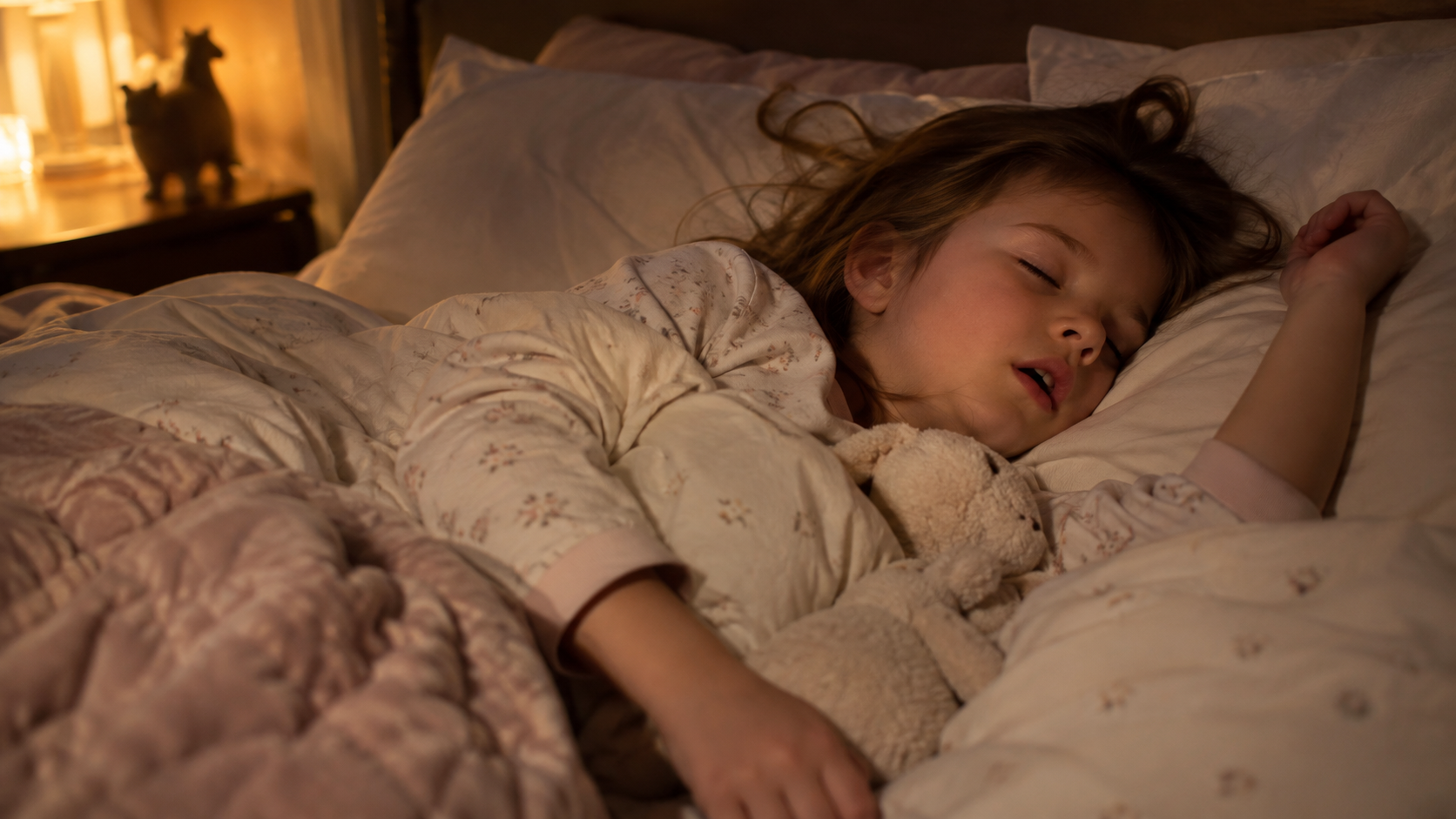
Why Does My Child Grind Their Teeth at Night?

Many Walnut Creek parents first notice teeth grinding at night when they hear a loud scraping sound coming from their child’s bedroom. This condition, known as pediatric bruxism, is common in children—but it should not always be dismissed as “just a phase.”
If you have searched for answers about why your child grinds their teeth at night, you are not alone. While occasional grinding can be normal during certain growth stages, persistent bruxism may signal underlying airway, developmental, or stress-related factors.
What Is Pediatric Bruxism?
Bruxism refers to clenching or grinding of the teeth, most often during sleep. It can occur in toddlers, school-aged children, and even teenagers. Some children grind lightly and temporarily, while others do so forcefully and consistently.
Parents may notice:
Grinding sounds during sleep
Flattened or worn tooth surfaces
Morning jaw soreness
Headaches
Restless sleep
Snoring or mouth breathing
The Airway Connection
One of the most overlooked causes of nighttime teeth grinding in children is airway restriction. When a child’s airway is partially obstructed during sleep, the body may respond by shifting the jaw forward in an attempt to open the airway. This protective reflex can trigger grinding.
Children who grind their teeth at night may also:
Snore
Sleep with their mouth open
Toss and turn frequently
Wake up tired
Experience bedwetting beyond expected age
In these cases, bruxism may be associated with sleep-disordered breathing.
Stress and Emotional Factors
Children can also grind their teeth due to stress or emotional tension. School transitions, new routines, social pressures, or even subtle anxiety can contribute to clenching during sleep.
Unlike adults, children may not verbalize stress clearly, and grinding becomes a physical outlet.
Bite Development and Growth Changes
As children grow, their teeth and jaws shift rapidly. Mild grinding may occur during periods of eruption, especially when baby teeth fall out and permanent teeth come in. Short-term grinding during these stages can be normal.
However, excessive wear, chipped enamel, or jaw discomfort should always be evaluated.
Why Early Evaluation Matters
Persistent bruxism can lead to enamel wear, tooth sensitivity, micro-fractures, and jaw discomfort. More importantly, if grinding is related to airway restriction or developmental concerns, identifying it early allows for conservative intervention.
A comprehensive pediatric dental evaluation may include assessing:
Jaw development
Bite alignment
Airway health
Tongue posture and possible tongue tie
Sleep symptoms
Addressing the root cause—not just the symptom—helps protect long-term oral and overall health.
If you are concerned about your child grinding their teeth at night, a pediatric dental evaluation can provide clarity and peace of mind. Early assessment helps determine whether the grinding is part of normal development or a sign of something deeper that should be addressed.
If grinding is tied to the airway, our Vivos airway growth program may help.
Ready to get started on your family's new dental journey? Contact us here!
Call (925) 949 - 8427
1800 San Miguel Dr.
Walnut Creek, CA 94596
Grinding can be airway-related — learn about pediatric airway dentistry.